Landlocked Voyagers: Samoans in Utah at the Turn of the Twentieth Century
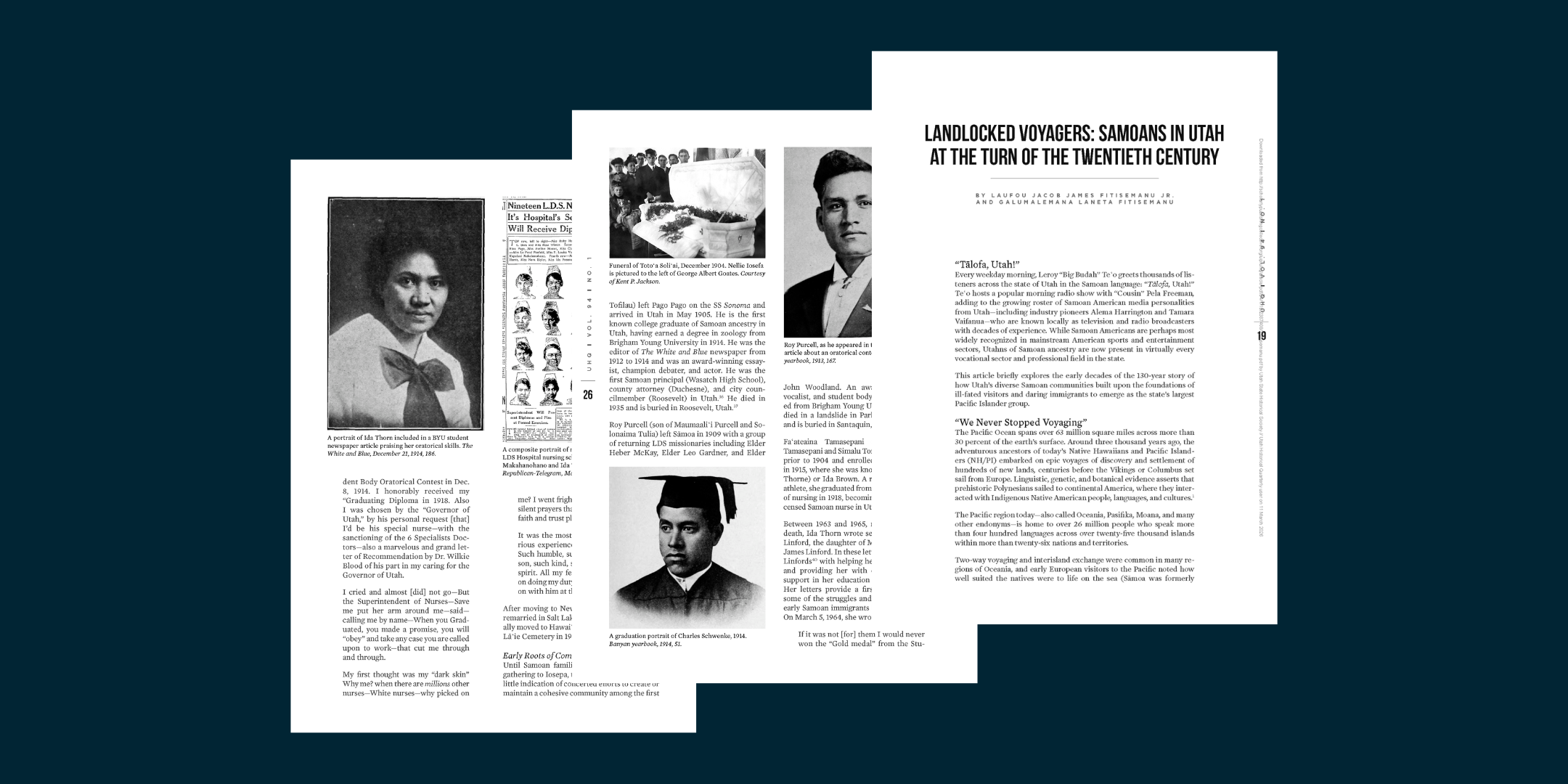
We are pleased to share the release of a new scholarly article, “Landlocked Voyagers: Samoans in Utah at the Turn of the Twentieth Century.” Featured in the Winter 2026 issue of the Utah Historical Quarterly.
The piece explores an important and often overlooked chapter in Utah’s history: the early presence and experiences of Samoan people in the region more than a century ago.
Tracing the early roots of Utah’s Samoan community, the article links their presence in the Intermountain West to the long history of Pacific voyaging and migration. Today, Samoan Americans represent the largest Pacific Islander community in Utah and contribute to nearly every sector of public life, from media and education to business, community leadership, and the arts.
By examining the roots of this presence, the authors hope to help readers better understand the historical foundations of a vibrant and growing community. This publication expands the historical record while honoring the resilience, mobility, and cultural strength that have shaped Samoan communities across the Pacific and in Utah.
We invite you to explore the full article and learn more about this remarkable history of voyaging, migration, and community-building.
Author’s Note
Corrections:
On page 31, the name John Kamauoha is misspelled as John Kekauoha. The correct spelling appears in footnote 49 on page 34.
Emma Purcell arrived with Flossie Kenison in 1896, making them the first Samoans to reside in Utah. Emma died in 1909, becoming the first Samoan to be buried at Iosepa.