Still Voyaging Today: A Word to Young People (and the adults in your lives)
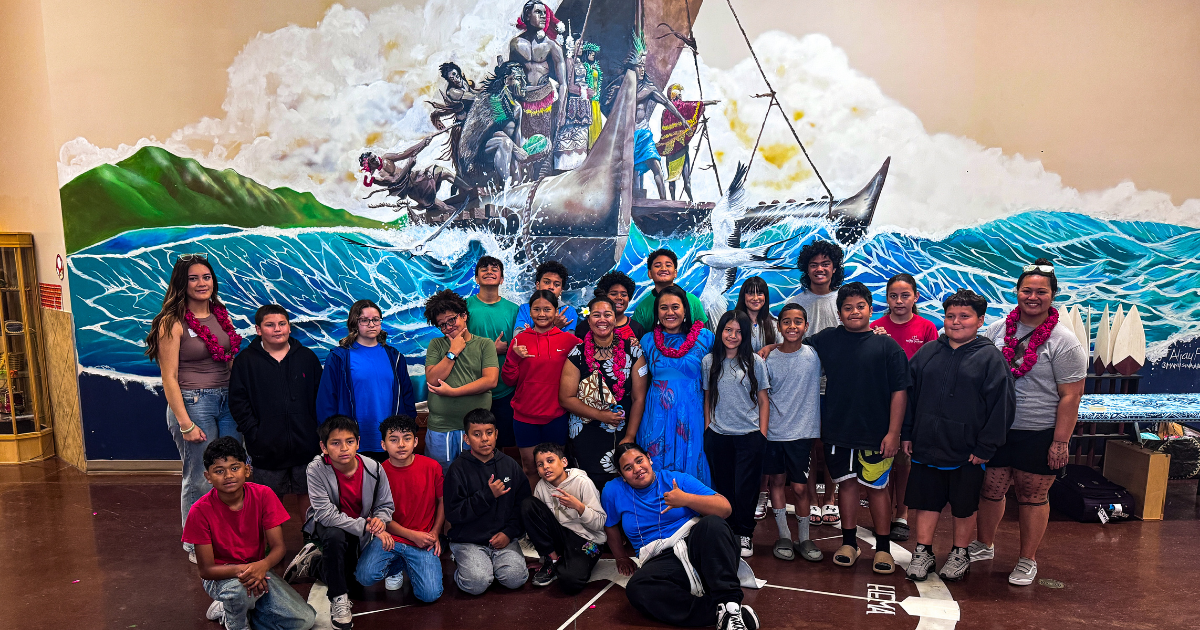
Next week we are hosting our 2nd annual Utah Wayfinding week and many of you may be curious, why Wayfinding Week in Utah of all places? To this question, our short answer is—why not?
Utah is home to close to 60,000 Native Hawaiian and Pacific Islanders. We may not have come here by sailing the ocean, and for the most part our cars and airplanes have taken the place of canoes, but like Moana learned in the movie: we are still voyagers.
The topics being taught during Wayfinding Week absolutely matter to those of us living in landlocked Utah, far away from the Pacific Ocean.
The very foundation of our cultures in the Pacific, what made us unique as a people, was our ancestral ability to navigate across thousands and thousands of miles of ocean.
Critics have compared Pacific navigation to European exploration. But this is like comparing Major and Minor leagues; they're similar in many ways, but just aren’t in the same league.
Pacific Navigation has historically been deemed inferior by academics who were ignorant to the truth. In the 1940s, a Norwegian man named Thor Heyerdahl tried to prove a theory that our people came from South America by drifting on a raft. He represented the common belief at the time that Pacific Islanders didn’t have the technical skills or the scientific knowledge to sail the open ocean on purpose. They were saying we weren’t smart enough.
When his raft drifted from Peru to an atoll in the Tuamotu Islands, he claimed to have proven the “drifting” theory of where Pacific Islanders came from. But that theory continues to be proven wrong over and over. Our ancestors were more than smart enough.
There are still people who can’t fathom that “stone age” people had the intelligence and capacity to navigate the open sea without European-style ships or modern technology. Some people continue to believe that our ancestors didn’t actually navigate using knowledge of the environment and nature that we developed and passed down over thousands of years.
This presents a new kind of danger unfolding in our communities in the diaspora. And that is the harm of thinking that wayfinding does not apply to us here and isn’t relevant in the modern world.
But that thinking couldn't be more wrong.
We cannot begin to understand who we are as a people here and now if we don't understand how we got to the Pacific in the first place. Our culture as a people stems from our ancestors' abilities to navigate vast distances of open water. The Pacific Ocean is the largest and deepest body of water on the planet. And our ancestors developed the knowledge necessary to traverse that ocean. To engineer vessels that would not only carry humans, plants, and animals from place to place, but would also keep passengers fed and sustained to make the long journeys and carry on our bloodlines, our languages, our cultures, our identities.
We cannot deny that the foundation of our culture is wayfinding.
Song and dance are important ways that our peoples have documented our stories and communicated our cultures long before written languages were introduced. But if we only focus on our beautiful performing arts, we risk losing out on opportunities to dive even further into our cultures.
To learn about our history of wayfinding and the science behind it is to gain a deeper understanding of what it truly means to know something. Through the depth of knowledge and understanding of the environment and nature, our ancestors became powerfully attuned to our surroundings.
In our modern world, technological advancements have us looking down at a screen rather than up at the night sky. All of the world’s navigational knowledge and technical information can be accessed on the internet, but that doesn't make our ancestral wayfinding irrelevant. If anything, wayfinding is more relevant today than it ever was because it can reconnect us to the ancestors and the voyaging roots of who we really are.
To the youth, who this week is all about, look up. Make time to be observant about the world around you. It is more important now than ever.
In the Great Basin desert of Utah, we have traded oceans for drought and toxic dust that today is now making its way into the air we breathe. The climate isn't what it was 10 years ago. You can tell. Some winters barely feel like winter anymore.
And outside of Utah we see our communities impacted too. This summer alone, two back-to-back typhoons devastated Guam and the Marianas Islands, and hurricanes have taken a direct hit on Hawai'i, something that hasn't happened in over 150 years. Scientists have long warned that a warming planet fuels stronger storms, and these rare weather disasters are a sign of what's to come.
With plans to mine minerals in our oceans and to open protected areas to exploitation, we can only imagine how this will impact our islands and our people in the future.
You come from people who looked at the impossible and found a way through it. That same instinct and ability and intelligence are literally in the DNA that courses through your veins right now.
Out of the billions of people on this planet, you are the only ones who can claim to be direct descendants of the powerful history and incredible achievements of the Pacific Islander voyagers. The success and progress of your generation is just another continuation of that epic voyage, so use that story and that legacy to keep moving forward with resilience, whether you're wayfinding across an ocean or across everything this chaotic world is throwing at you.
So yes, wayfinding is important. It is relevant. In fact, it’s necessary in order to truly understand who we are and where we come from. Wayfinding will help you focus, to respect where you live and who you live with, and to navigate modern life just as your ancestors navigated the seas. So, don’t miss the va’a!
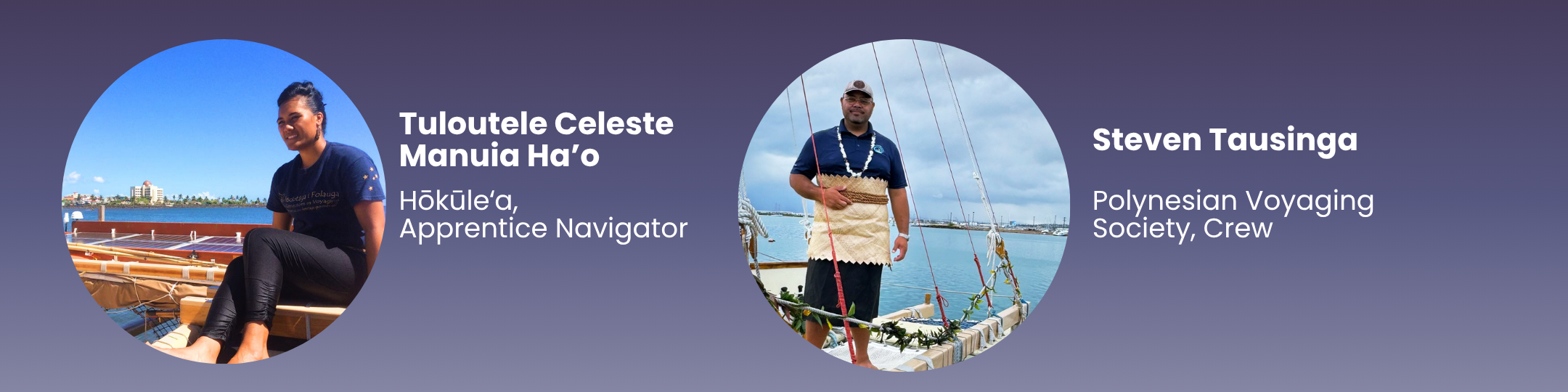
This year's Wayfinding Week will be led by Tuloutele Celeste Manuia Ha'o and Steven Tausinga, who have traveled from Hawai'i to guide us. Fa'afetai tele lava to our visiting wayfinders for making the journey to Utah and sharing their knowledge with us.
Fa’afetai to our wonderful village for their helping hands and open hearts to make this week’s events happen.